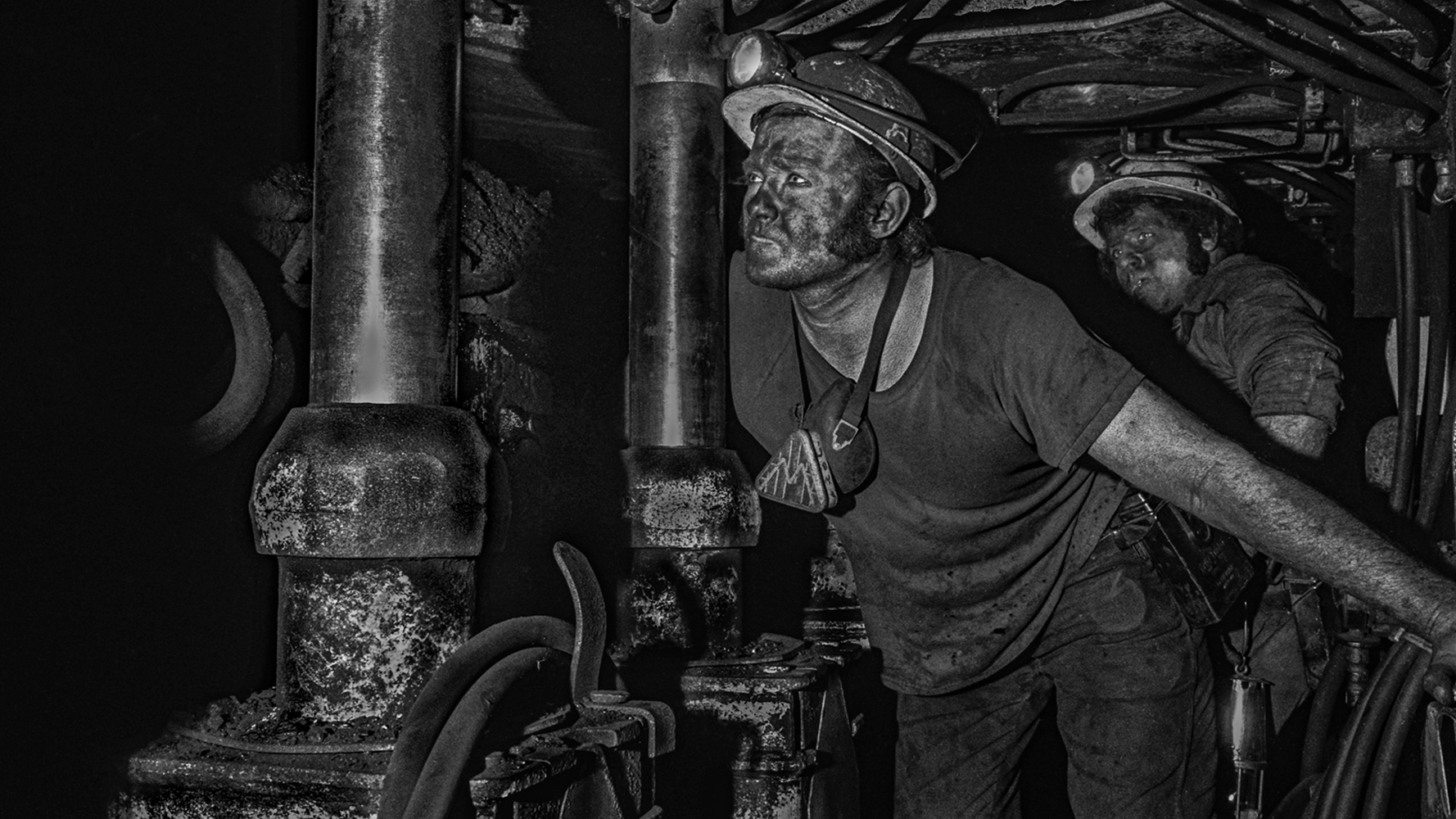
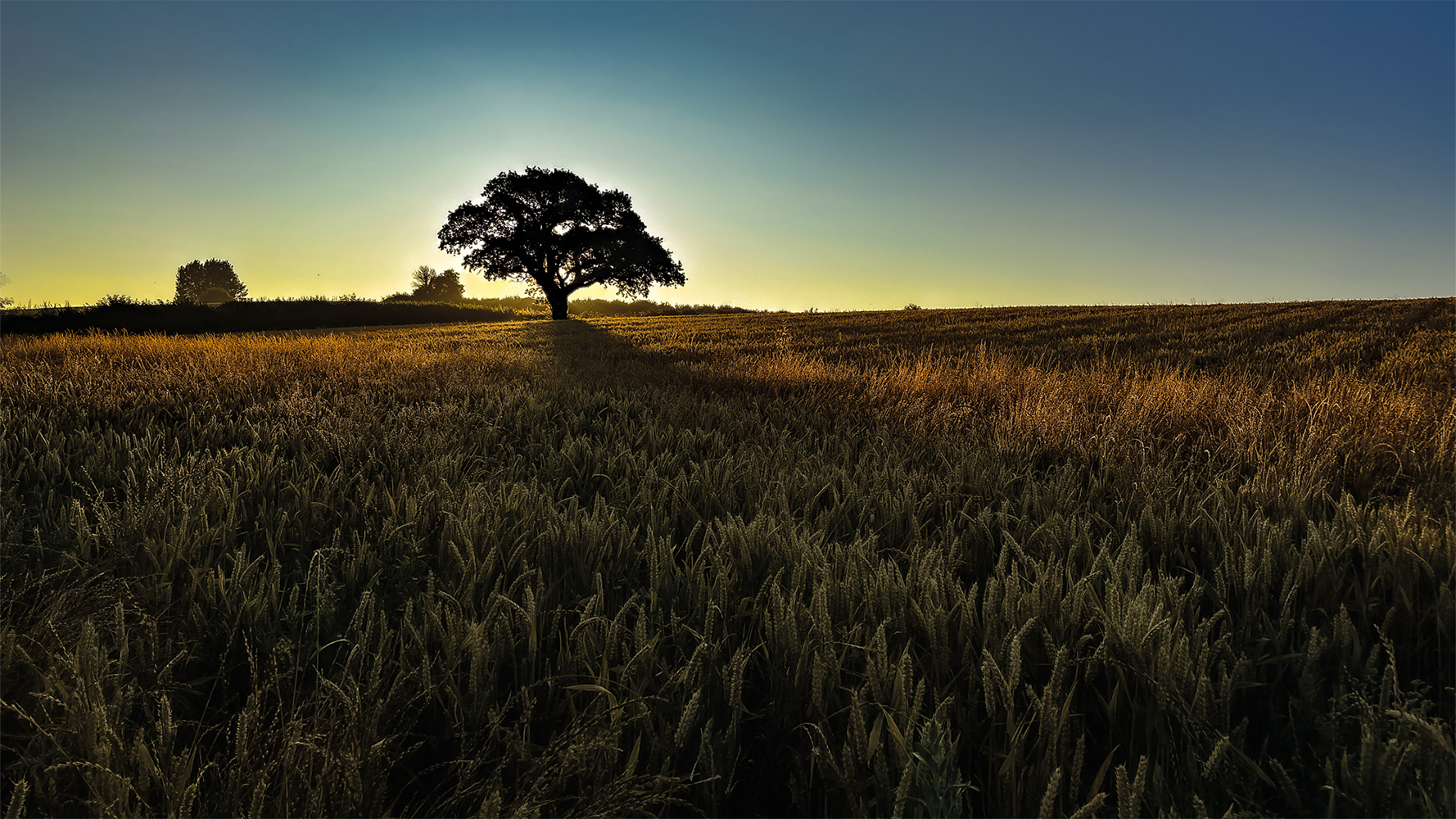
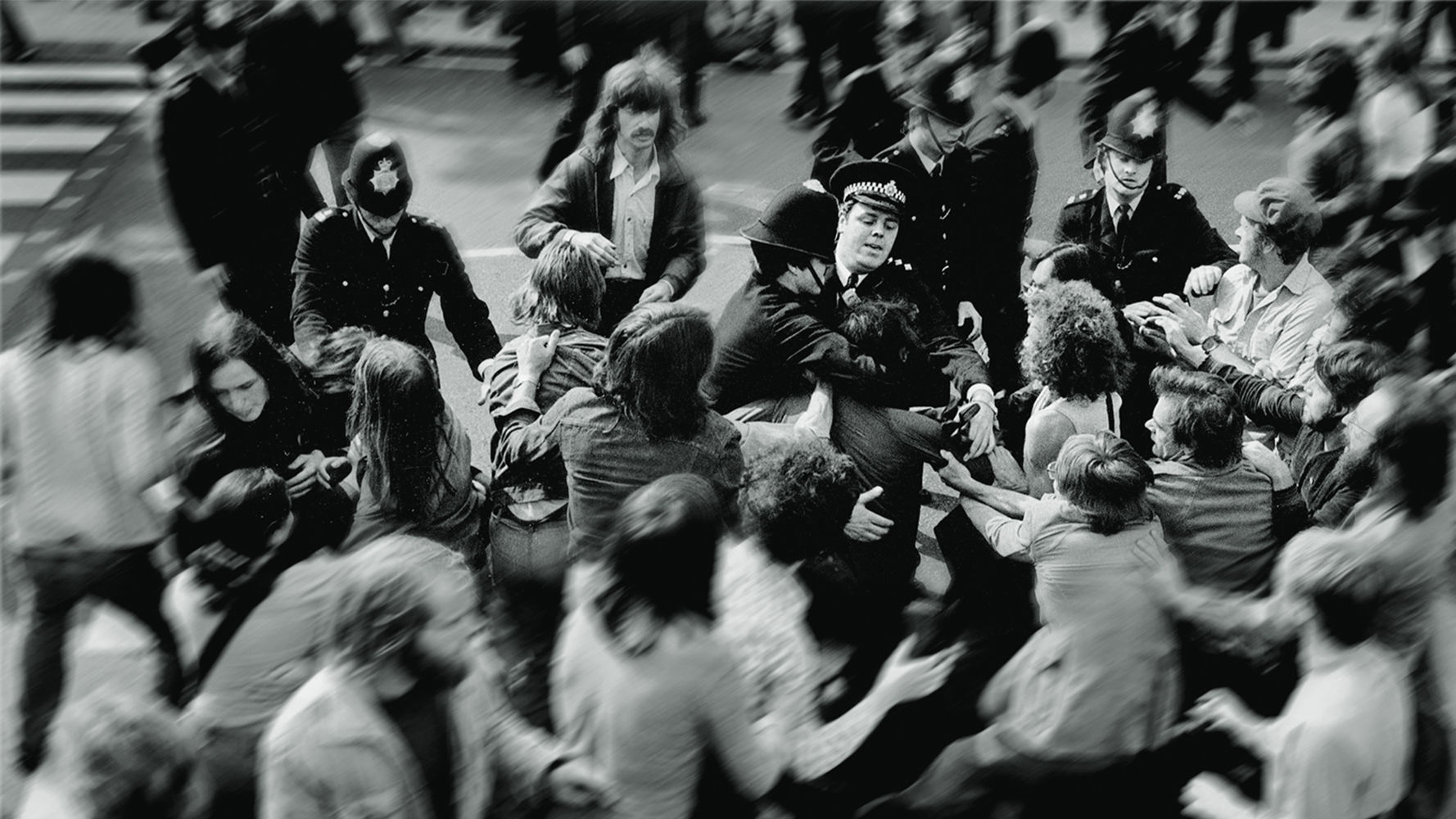
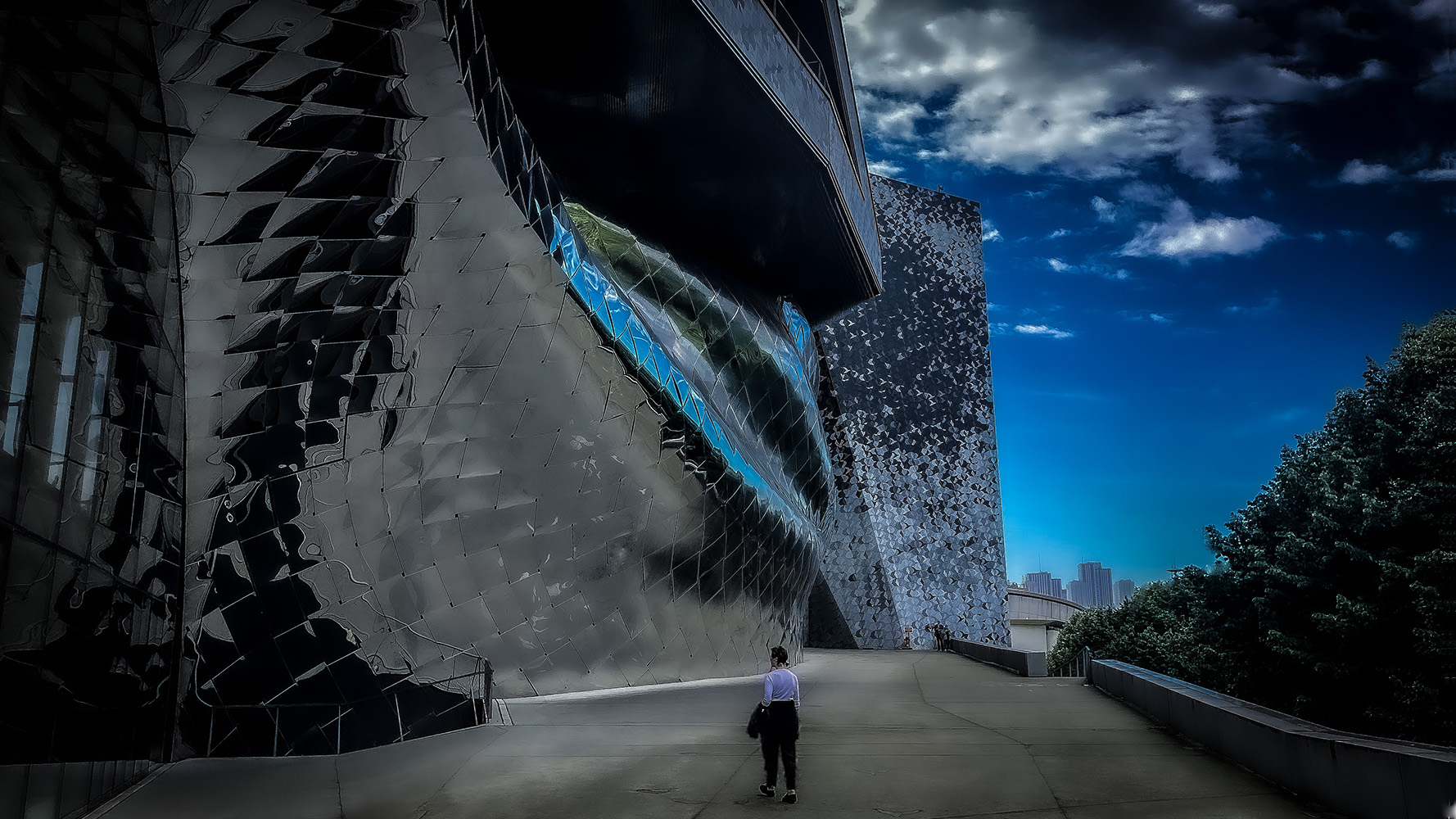






PHOTOGRAPHY:MAKING MEANING is a course encouraging learners to discover meaningful themes by following a journey through ideas, tools and techniques helping to develop, at your own pace, visual skills by exploring artistic and photographic traditions. We offer a Q and A page and at times, hints about how to do things. We will upload new essays, films and photographs. Whichever of the three subscriptions you purchase, you will have continual access to the material.
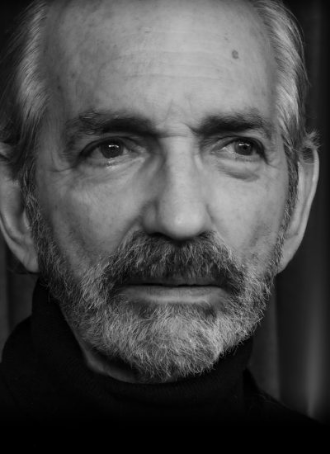
The most original element of this course is that it guides you to connect your inner life with the external world through your evolving photographic practice. Emphasizing personal emotional and thoughtful exploration, it encourages reflection on your ideas and feelings. Led by a multi-award winning, often published and exhibited documentary, portrait and food photographer, he is also a multi-award winning filmmaker.
Recently a Ukrainian student of Robert wrote, “You cannot imagine how much you already made me think. I’ve collected 21 ideas that may have social impact, and they are only around war, but there is so much more to explore.”
And this from Chris Hilton: Photo Club chairman, England, “I participated in a series of photography workshops organized by Robert. I cannot begin to describe the impact the workshops had on me. I learned to think deeper about the reasons to photograph subject matter. Robert is a listening mentor; special learning journeys are guaranteed with him.”
PHOTOGRAPHY:MAKING MEANING is a course encouraging and supporting learners to discover meaningful themes by following a journey through ideas, tools and techniques helping to develop, at your own pace, visual skills by exploring artistic and especially photographic traditions. We offer a Q and A page and at various times, hints about how to do things. We will upload new essays, films and photographs. Whichever of the three subscriptions you purchase, you will have continual access to the material.
Recently a Ukrainian student of Robert wrote, “You cannot imagine how much you already made me think. I’ve collected 21 ideas that may have social impact, and they are only around war, but there is so much more to explore.”
And this from Chris Hilton: Photo Club chairman, England, “I participated in a series of photography workshops organized by Robert. I cannot begin to describe the impact the workshops had on me. I learned to think deeper about the reasons to photograph subject matter. Robert is a listening mentor; special learning journeys are guaranteed with him.”
THIS COURSE IS FOR
This course’s series of films and the accompanying teaching materials, written without jargon in plain English, is as welcoming to people with little knowledge of photography as well as to people who are professional or advanced amateurs committed to this wonderful medium, who wish to broaden their thinking and to engage with various creative prompts.
Those best suited to take full advantage should have two areas of basic knowledge.
First you will need to know the basic controls on your camera, whether it is in a smart phone, starter level DSLR, or a 10 x 8 plate camera, using sheet film.
Second you should be able to upload your digital negatives into an editing tool as Photoshop.
We are pleased to say that in our testing we have shown the films to painters, theatre makers, writers and poets and have received warm responses with our audience proposing that even if photography is the medium at the centre of these films there is much to be gained about culture, beauty, expressivity and the imaginative processes all artists utilise.
The Basic Ideas
episodes (26′ each)
01 - DEFINITIONS
- The meaning of the word ‘PHOTOGRAPHY’
- VISUAL LITERACY
- SEEING and LOOKING
- CURIOSITY REFLECTIONS as DOCUMENTATION or REFRACTIONS of VISUAL POETRY.
- The differences between CRAFT and ART
- Reviewing the students mages
- TECHNIQUE & APPROPRIATE STYLE
- The relationship between TRUTH and BEAUTY
02 - FINDING PURPOSE
- FINDING YOUR VOICE
- To give a voice to the voiceless in history
- To make the invisible powers which control us become visible
- To create beauty
- FROM REACTIVE to PROACTIVE
- How to make rather than to take photographs
- WHO, WHY, WHAT, WHERE, WHEN AND HOW
- TECHNICAL/CREATIVE CHOICES
- The lens and medium you use
- The shutter speed and diaphragm you select
- The point of focus and the angle you select
- The final edit
- LIGHT as an active participant in images
- TIME as an active participant in images
03 - LEARNING VISUAL TOOLS
- The curse of GENERALISING
- The DECISIVE MOMENT
- PRE-VISUALISATION (and the three creative moments: acquisition, editing, presentation)
- EQUIVALENCE
- BEING PRESENT
- Discovering the INEFFABLE
- The relationship between SUBJECTS MATTER, CONTENT and THEMES
- The difference between a SERIES, a SEQUENCE and an ESSAY
+ pre-recorded audio discussions
+ selection of essays
+ manual (digital)
+ illustrated lecture
+ exclusive deals
Materials & Tools
04 - THE FIRST MATERIAL: LIGHT
- Types: natural or artificial
- Intensity and balancing sources
- Gamma/dynamic range
- Source nature: tungsten, LED, fluorescent
- Shape: soft or hard output
- Direct, bounced, or diffused light
- Brightness measurement: reflection/ambient (Zone System)
- Colour: measured in Kelvin, camera settings alignment
- Mixing different sources
- Colour theory: luminance, hue, saturation
- Exposure control methods
- Light’s emotive impact: forms, translucency, opacity, highlights, shadow interplay
- Influences: Da Vinci’s chiaroscuro, Caravaggio’s single-source lighting, Rembrandt’s triangle, and modern core lighting
05 - THE SECOND MATERIAL: TIME
- Presence in the moment
- Motion vs. stillness
- Stieglitz: pre-visualized images
- Cartier-Bresson: Decisive Moment
- Strand: time as history
- Frozen vs. fluid time
- Realism and naturalism
- History as present
- Responsibility to history
- Portraits over time
- Photographing loved ones during difficulties
06 - LENSES & COMPOSITION
- sharpness and acutance
- lens coating
- focal point
- depth of field
- lens length and distortions
- ways of seeing
- emotional differences in different lens lengths
- framing
- what is in and not in the frame
- about composition
- colour and composition
- monochrome and composition
- Sharpness & acutance
- Lens coating
- Focal point
- Depth of field
- Lens length & distortion
- Viewing techniques
- Lens length & emotion
- Framing
- Inclusion/exclusion in frame
- Composition basics
- Color & composition
- Monochrome & composition
+ pre-recorded audio discussions
+ selection of essays
+ manual (digital)
+ illustrated lecture
+ exclusive deals
Different Specialities
07 - PORTRAITS
- Definition
- Likeness explained
- Purpose of portraits
- Trust, reputation, curiosity, concern
- Formal styles
- found but grabbed
- Candid capture
- Focus and clarity
- Diffusion and smoothing techniques
- Realism vs. romanticism
- Lighting tips
- Portraits as dialogue
- the photographer’s responsibility
- Revealing true nature respectfully
- The portrait series
08 - LAND & CITYSCAPES
- Pattern
- Light
- Weather
- Freezing vs dissolving time
- Tripod or handheld
- Tonal range
- Monochrome vs colour
- Saturated vs pastel colour
- Realism vs romanticism
- Single image vs series
- Series vs essay
- Photographer’s responsibility
- Wonder
09 - STILL-LIFE
- Definition
- History
- Types: natural (untouched/arranged), assembled (available/studio light)
- Advertising/tabletop uses
- Botanical still-life
- Food photography
- Action elements
- Made vs. documentary
- Paul Strand’s narrative focus
- Diverse subjects
- Edward Weston’s minimalism
- Lighting options
- Storytelling in still-life
10 - DOCUMENTARY PHOTOGRAPHY
- The right to photograph
- Joining still-life, cityscapes, landscapes, portraits, and candid documentary
- Discovering shared humanity
- Making a contribution through photography
- When monochrome fits the subject
- The personal irrelevance of colour naturalism
- Ethical responsibility in image use
- Finding and applying the right style and technique
- Art transcends culture and time
- Single images, collections, series, essays
- Aligning work with personal values
- Reporting vs. engaging
- And more
+ pre-recorded audio discussions
+ selection of essays
+ manual (digital)
+ illustrated lecture
+ exclusive deals
Ideas & Storytelling
episodes
11 - DISCOVERING THEMES, CONTENT, SUBJECT MATTER & STYLE
- Mind mapping to explore values, morality, and responsibility
- Turning meaning into themes, and themes into content
- Defining truth and beauty, and their relationship
12 - ESSAYS & STORYTELLING
From the single image to a collection (as in a portfolio), a series and a photoessay Storytelling and the brain
A story of ourselves
Grace and rhythm
- Within a shot – composition
- From shot to shot – cohesion between shots
- Bringing together all the above
- Re-thinking purpose
- Whose voice is represented
- Personal narratives
- Grace and rhythm in composition
- Integrating all elements
- Reassessing intent
- Voice representation
+ pre-recorded audio discussions
+ selection of essays
+ manual (digital)
+ illustrated lecture
+ exclusive deals
The Basic Ideas
episodes (26′ each)
01 - DEFINITIONS
- The meaning of the word ‘PHOTOGRAPHY’
- VISUAL LITERACY
- SEEING and LOOKING
- CURIOSITY REFLECTIONS as DOCUMENTATION or REFRACTIONS of VISUAL POETRY.
- The differences between CRAFT and ART
- Reviewing the students mages
- TECHNIQUE & APPROPRIATE STYLE
- The relationship between TRUTH and BEAUTY
02 - FINDING PURPOSE
- FINDING YOUR VOICE
- To give a voice to the voiceless in history
- To make the invisible powers which control us become visible
- To create beauty
- FROM REACTIVE to PROACTIVE
- How to make rather than to take photographs
- WHO, WHY, WHAT, WHERE, WHEN AND HOW
- TECHNICAL/CREATIVE CHOICES
- The lens and medium you use
- The shutter speed and diaphragm you select
- The point of focus and the angle you select
- The final edit
- LIGHT as an active participant in images
- TIME as an active participant in images
03 - LEARNING VISUAL TOOLS
- The curse of GENERALISING
- The DECISIVE MOMENT
- PRE-VISUALISATION (and the three creative moments: acquisition, editing, presentation)
- EQUIVALENCE
- BEING PRESENT
- Discovering the INEFFABLE
- The relationship between SUBJECTS MATTER, CONTENT and THEMES
- The difference between a SERIES, a SEQUENCE and an ESSAY
+ pre-recorded audio discussions
+ selection of essays
+ manual (digital)
+ illustrated lecture
+ exclusive deals
THE COURSE CONTAINS FOUR SERIES
12 x 26 MINUTE FILMS
Materials & Tools
04 - THE FIRST MATERIAL: LIGHT
- Types: natural or artificial
- Intensity and balancing sources
- Gamma/dynamic range
- Source nature: tungsten, LED, fluorescent
- Shape: soft or hard output
- Direct, bounced, or diffused light
- Brightness measurement: reflection/ambient (Zone System)
- Colour: measured in Kelvin, camera settings alignment
- Mixing different sources
- Colour theory: luminance, hue, saturation
- Exposure control methods
- Light’s emotive impact: forms, translucency, opacity, highlights, shadow interplay
- Influences: Da Vinci’s chiaroscuro, Caravaggio’s single-source lighting, Rembrandt’s triangle, and modern core lighting
05 - THE SECOND MATERIAL: TIME
- Presence in the moment
- Motion vs. stillness
- Stieglitz: pre-visualized images
- Cartier-Bresson: Decisive Moment
- Strand: time as history
- Frozen vs. fluid time
- Realism and naturalism
- History as present
- Responsibility to history
- Portraits over time
- Photographing loved ones during difficulties
06 - LENSES & COMPOSITION
- sharpness and acutance
- lens coating
- focal point
- depth of field
- lens length and distortions
- ways of seeing
- emotional differences in different lens lengths
- framing
- what is in and not in the frame
- about composition
- colour and composition
- monochrome and composition
- Sharpness & acutance
- Lens coating
- Focal point
- Depth of field
- Lens length & distortion
- Viewing techniques
- Lens length & emotion
- Framing
- Inclusion/exclusion in frame
- Composition basics
- Color & composition
- Monochrome & composition
+ pre-recorded audio discussions
+ selection of essays
+ manual (digital)
+ illustrated lecture
+ exclusive deals
Different Specialities
07 - PORTRAITS
- Definition
- Likeness explained
- Purpose of portraits
- Trust, reputation, curiosity, concern
- Formal styles
- found but grabbed
- Candid capture
- Focus and clarity
- Diffusion and smoothing techniques
- Realism vs. romanticism
- Lighting tips
- Portraits as dialogue
- the photographer’s responsibility
- Revealing true nature respectfully
- The portrait series
08 - LAND & CITYSCAPES
- Pattern
- Light
- Weather
- Freezing vs dissolving time
- Tripod or handheld
- Tonal range
- Monochrome vs colour
- Saturated vs pastel colour
- Realism vs romanticism
- Single image vs series
- Series vs essay
- Photographer’s responsibility
- Wonder
09 - STILL-LIFE
- Definition
- History
- Types: natural (untouched/arranged), assembled (available/studio light)
- Advertising/tabletop uses
- Botanical still-life
- Food photography
- Action elements
- Made vs. documentary
- Paul Strand’s narrative focus
- Diverse subjects
- Edward Weston’s minimalism
- Lighting options
- Storytelling in still-life
10 - DOCUMENTARY PHOTOGRAPHY
- The right to photograph
- Joining still-life, cityscapes, landscapes, portraits, and candid documentary
- Discovering shared humanity
- Making a contribution through photography
- When monochrome fits the subject
- The personal irrelevance of colour naturalism
- Ethical responsibility in image use
- Finding and applying the right style and technique
- Art transcends culture and time
- Single images, collections, series, essays
- Aligning work with personal values
- Reporting vs. engaging
- And more
+ pre-recorded audio discussions
+ selection of essays
+ manual (digital)
+ illustrated lecture
+ exclusive deals
Ideas & Storytelling
11 - DISCOVERING THEMES, CONTENT, SUBJECT MATTER & STYLE
- Mind mapping to explore values, morality, and responsibility
- Turning meaning into themes, and themes into content
- Defining truth and beauty, and their relationship
12 - ESSAYS & STORYTELLING
From the single image to a collection (as in a portfolio), a series and a photoessay Storytelling and the brain
A story of ourselves
Grace and rhythm
- Within a shot – composition
- From shot to shot – cohesion between shots
- Bringing together all the above
- Re-thinking purpose
- Whose voice is represented
- Personal narratives
- Grace and rhythm in composition
- Integrating all elements
- Reassessing intent
- Voice representation
+ pre-recorded audio discussions
+ selection of essays
+ manual (digital)
+ illustrated lecture
+ exclusive deals
The Basic Ideas
SERIES ONE /4
Introductory ideas about photography, culture & visual art.
episodes (26′ each)
01 - DEFINITIONS
- The meaning of the word ‘PHOTOGRAPHY’
- VISUAL LITERACY
- SEEING and LOOKING
- CURIOSITY REFLECTIONS as DOCUMENTATION or REFRACTIONS of VISUAL POETRY.
- The differences between CRAFT and ART
- Reviewing the students mages
- TECHNIQUE & APPROPRIATE STYLE
- The relationship between TRUTH and BEAUTY
02 - FINDING PURPOSE
- FINDING YOUR VOICE
- To give a voice to the voiceless in history
- To make the invisible powers which control us become visible
- To create beauty
- FROM REACTIVE to PROACTIVE
- How to make rather than to take photographs
- WHO, WHY, WHAT, WHERE, WHEN AND HOW
- TECHNICAL/CREATIVE CHOICES
- The lens and medium you use
- The shutter speed and diaphragm you select
- The point of focus and the angle you select
- The final edit
- LIGHT as an active participant in images
- TIME as an active participant in images
03 - LEARNING VISUAL TOOLS
- The curse of GENERALISING
- The DECISIVE MOMENT
- PRE-VISUALISATION (and the three creative moments: acquisition, editing, presentation)
- EQUIVALENCE
- BEING PRESENT
- Discovering the INEFFABLE
- The relationship between SUBJECTS MATTER, CONTENT and THEMES
- The difference between a SERIES, a SEQUENCE and an ESSAY
+ pre-recorded audio discussions
+ selection of essays
+ manual (digital)
+ illustrated lecture
+ exclusive deals
Materials & Tools
04 - THE FIRST MATERIAL: LIGHT
- Types: natural or artificial
- Intensity and balancing sources
- Gamma/dynamic range
- Source nature: tungsten, LED, fluorescent
- Shape: soft or hard output
- Direct, bounced, or diffused light
- Brightness measurement: reflection/ambient (Zone System)
- Colour: measured in Kelvin, camera settings alignment
- Mixing different sources
- Colour theory: luminance, hue, saturation
- Exposure control methods
- Light’s emotive impact: forms, translucency, opacity, highlights, shadow interplay
- Influences: Da Vinci’s chiaroscuro, Caravaggio’s single-source lighting, Rembrandt’s triangle, and modern core lighting
05 - THE SECOND MATERIAL: TIME
- Presence in the moment
- Motion vs. stillness
- Stieglitz: pre-visualized images
- Cartier-Bresson: Decisive Moment
- Strand: time as history
- Frozen vs. fluid time
- Realism and naturalism
- History as present
- Responsibility to history
- Portraits over time
- Photographing loved ones during difficulties
06 - LENSES & COMPOSITION
- sharpness and acutance
- lens coating
- focal point
- depth of field
- lens length and distortions
- ways of seeing
- emotional differences in different lens lengths
- framing
- what is in and not in the frame
- about composition
- colour and composition
- monochrome and composition
- Sharpness & acutance
- Lens coating
- Focal point
- Depth of field
- Lens length & distortion
- Viewing techniques
- Lens length & emotion
- Framing
- Inclusion/exclusion in frame
- Composition basics
- Color & composition
- Monochrome & composition
+ pre-recorded audio discussions
+ selection of essays
+ manual (digital)
+ illustrated lecture
+ exclusive deals
Different Specialities
07 - PORTRAITS
- Definition
- Likeness explained
- Purpose of portraits
- Trust, reputation, curiosity, concern
- Formal styles
- found but grabbed
- Candid capture
- Focus and clarity
- Diffusion and smoothing techniques
- Realism vs. romanticism
- Lighting tips
- Portraits as dialogue
- the photographer’s responsibility
- Revealing true nature respectfully
- The portrait series
08 - LAND & CITYSCAPES
- Pattern
- Light
- Weather
- Freezing vs dissolving time
- Tripod or handheld
- Tonal range
- Monochrome vs colour
- Saturated vs pastel colour
- Realism vs romanticism
- Single image vs series
- Series vs essay
- Photographer’s responsibility
- Wonder
09 - STILL-LIFE
- Definition
- History
- Types: natural (untouched/arranged), assembled (available/studio light)
- Advertising/tabletop uses
- Botanical still-life
- Food photography
- Action elements
- Made vs. documentary
- Paul Strand’s narrative focus
- Diverse subjects
- Edward Weston’s minimalism
- Lighting options
- Storytelling in still-life
10 - DOCUMENTARY PHOTOGRAPHY
- The right to photograph
- Joining still-life, cityscapes, landscapes, portraits, and candid documentary
- Discovering shared humanity
- Making a contribution through photography
- When monochrome fits the subject
- The personal irrelevance of colour naturalism
- Ethical responsibility in image use
- Finding and applying the right style and technique
- Art transcends culture and time
- Single images, collections, series, essays
- Aligning work with personal values
- Reporting vs. engaging
- And more
+ pre-recorded audio discussions
+ selection of essays
+ manual (digital)
+ illustrated lecture
+ exclusive deals
Ideas & Storytelling
11 - DISCOVERING THEMES, CONTENT, SUBJECT MATTER & STYLE
- Mind mapping to explore values, morality, and responsibility
- Turning meaning into themes, and themes into content
- Defining truth and beauty, and their relationship
12 - ESSAYS & STORYTELLING
From the single image to a collection (as in a portfolio), a series and a photoessay Storytelling and the brain
A story of ourselves
Grace and rhythm
- Within a shot – composition
- From shot to shot – cohesion between shots
- Bringing together all the above
- Re-thinking purpose
- Whose voice is represented
- Personal narratives
- Grace and rhythm in composition
- Integrating all elements
- Reassessing intent
- Voice representation
+ pre-recorded audio discussions
+ selection of essays
+ manual (digital)
+ illustrated lecture
+ exclusive deals
UPCOMING LIVE SESSIONS
Paragraph about the Q&As, the available options, mentioning that some are dedicated to members and from some tickets can be bought.
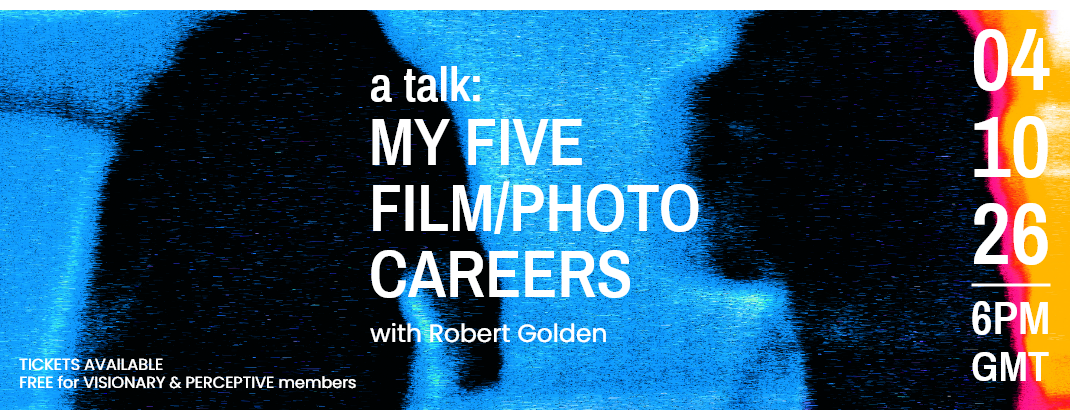
a talk: my five film/photo careers
with Robert golden
04 october 2026 / 6PM GMT / 2h+
This talk will show the different genres of work Robert has engaged in across his long career. Beautifully illustrated with individual images, stills films and his professional reels it offers many ways to think about making photography as stills and film. Between his describing and showing, he will ask for questions which, as in the past, open serious discussions about the medium and people’s engagement with it.
VISIONARY & PERCEPTIVE members will receive an email with all the details on how to join the online call.This discussion is included in the original VISIONARY & PERCEPTIVE membership purchase. CURIOS members have the possibility of upgrading to VISIONARY or PERCEPTIVE from their account, or to purchase a separate ticket. NON-MEMBERS are welcomed & have the possibility to purchase tickets.
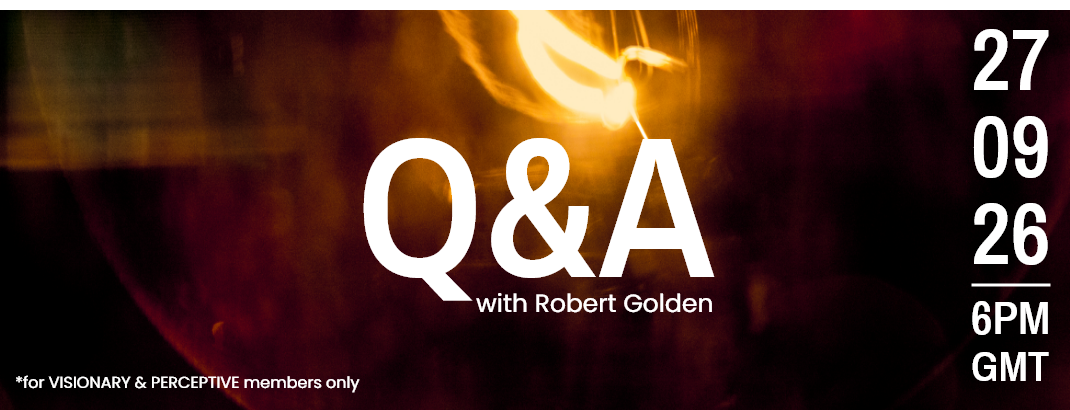
Q&A - LivE DISCUSSION - with Robert golden 27 SEPTEMBER 2026 / 6PM GMT / 2h+
Participants are asked to submit two identifiable JPEGs of their finished edit by 4 September. If available, they may also include the original digital negative; for film photographs, only the finished edit should be submitted. Late submissions will not be considered.Robert has discovered in his own work and in teaching that these single-photograph based discussions lead to rich and valuable conversations. Please understand that there is no right or wrong in this.What he has to say is purely subjective and personal to him but you must be willing to accept an honest critique …it is the only one that carries real value for one’s development.He suggests if you cannot accept criticism, then do not submit an image. None the less, seeing other people’s photographs discussed can be rewarding. You are welcome to sit in on the discussions. Because this is a discussion and not a lecture, given time constraints, he cannot promise to discuss every image. Please understand he will not consider anything that is overtly sexually exploitive, racist, cruel or hateful towards others or animals nor will he enter a discussion about why a photo has been ignored.VISIONARY members will receive an email with all the details, including how to join the online call and how to submit the work for consideration. This discussion is included in the original VISIONARY membership purchase.CURIOS & PERCEPTIVE members have the possibility of upgrading to VISIONARY from their account.
VISIONARY members will receive an email with all the details, including how to join the online call and how to submit the work for consideration. This discussion is included in the original VISIONARY membership purchase. CURIOS & PERCEPTIVE members have the possibility of upgrading to VISIONARY from their account.
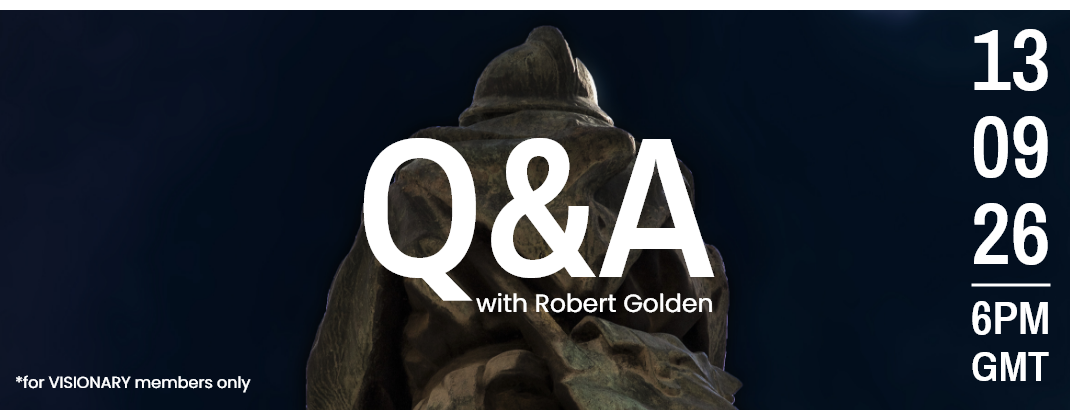
Q&A - LivE DISCUSSION - with Robert golden 13 SEPTEMBER 2026 / 6PM GMT / 2h+
Participants are asked to submit two identifiable JPEGs of their finished edit by 4 September. If available, they may also include the original digital negative; for film photographs, only the finished edit should be submitted. Late submissions will not be considered.Robert has discovered in his own work and in teaching that these single-photograph based discussions lead to rich and valuable conversations. Please understand that there is no right or wrong in this.What he has to say is purely subjective and personal to him but you must be willing to accept an honest critique …it is the only one that carries real value for one’s development.He suggests if you cannot accept criticism, then do not submit an image. None the less, seeing other people’s photographs discussed can be rewarding. You are welcome to sit in on the discussions. Because this is a discussion and not a lecture, given time constraints, he cannot promise to discuss every image. Please understand he will not consider anything that is overtly sexually exploitive, racist, cruel or hateful towards others or animals nor will he enter a discussion about why a photo has been ignored.
VISIONARY members will receive an email with all the details, including how to join the online call and how to submit the work for consideration. This discussion is included in the original VISIONARY membership purchase. CURIOS & PERCEPTIVE members have the possibility of upgrading to VISIONARY from their account.

MANUAL
This manual will help you to learn at your own pace. You may read a passage and wish to quickly find greater detail which you can do by using the manual’s connectivity to internet references.
Your film is gorgeous, wise, compelling. I liked very much the humanity, the care for others, you as an agent of change. I am very interested in this question of transformation – how can we use words, images, creativity to change people’s sense of agency.
PROFESSOR J P
I LOVE IT!
It’s engaging, thoughtful, deep, well balanced, interesting, has great rhythm & perfect emphasis in key points. Amazing images & everything put together in such a way that it took me through this unexpected interior journey & left me wanting more!
I M G – DESIGNER & VISUAL ARTIST
Your film is gorgeous, wise, compelling. I liked very much the humanity, the care for others, you as an agent of change. I am very interested in this question of transformation – how can we use words, images, creativity to change people’s sense of agency.
PROFESSOR J P
I LOVE IT!
It’s engaging, thoughtful, deep, well balanced, interesting, has great rhythm & perfect emphasis in key points. Amazing images & everything put together in such a way that it took me through this unexpected interior journey & left me wanting more!
I M G – DESIGNER & VISUAL ARTIST
ABOUT R.GOLDEN
Robert is an award-winning photographer, writer, and filmmaker. He has excelled as a photojournalist, photo-illustrator, and portrait photographer for publishing houses and the music industry. Robert was recognized as one of the top three food photographers in Europe. He has directed and been the director of photography for over 900 often award-winning television commercials. His documentaries have been featured at international film festivals, with notable recognition for his writing and directing. Robert has mentored emerging photographers and film makers through workshops at various institutions and organizations, including with universities in South Africa, Bosnia, Ukraine and England. As a documentary writer/director and mentor, he helps others discover their creative potential to produce beautiful, meaningful photographs.
ABOUT R.GOLDEN
Robert is an award-winning photographer, writer, and filmmaker. He has excelled as a photojournalist, photo-illustrator, and portrait photographer for publishing houses and the music industry. Robert was recognized as one of the top three food photographers in Europe. He has directed and been the director of photography for over 900 often award-winning television commercials. His documentaries have been featured at international film festivals, with notable recognition for his writing and directing. Robert has mentored emerging photographers and film makers through workshops at various institutions and organizations, including with universities in South Africa, Bosnia, Ukraine and England. As a documentary writer/director and mentor, he helps others discover their creative potential to produce beautiful, meaningful photographs.